As motorcycles continue to evolve beyond pure performance machines toward broader daily and touring use, expectations for comfort, stability, and adaptability have become increasingly important. Alongside developments in powertrain and transmission systems, suspension technology plays a decisive role in shaping how riders experience the road. In this context, air suspension represents a significant step forward in allowing motorcycles to adapt more effectively to varying loads, road conditions, and riding scenarios.
From Conventional Damping to Air Suspension
Conventional motorcycle suspension relies primarily on steel springs combined with hydraulic damping. While mechanically robust, this configuration offers limited adaptability. Ride height and spring characteristics remain largely fixed, and achieving balanced performance across solo riding, passenger load, and changing road surfaces often requires manual compromise. Air suspension replaces mechanical springs with pressurized air as the elastic medium, allowing both ride height and suspension stiffness to be adjusted through pressure regulation, greatly expanding the operating range of the suspension system.
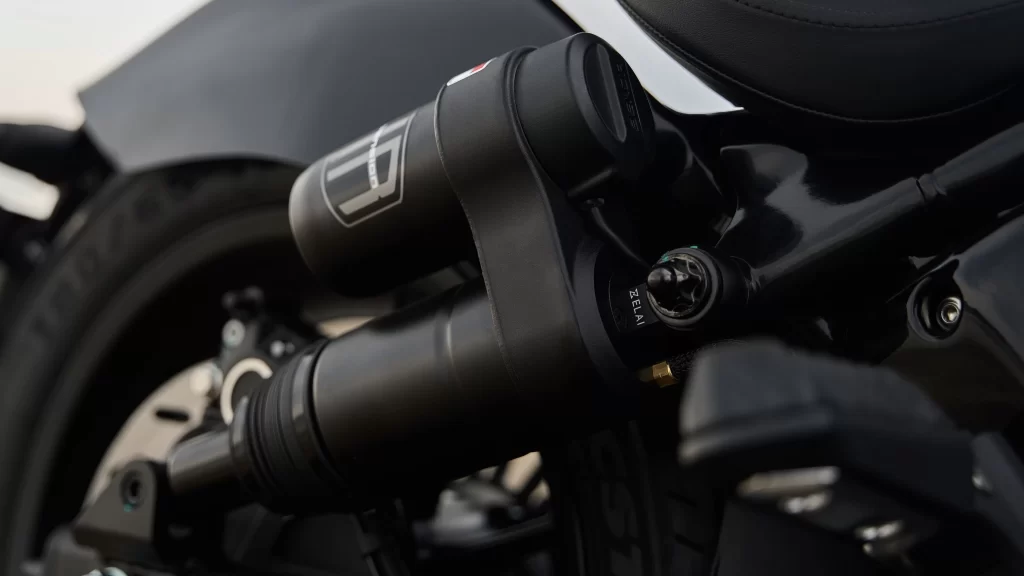
In advanced configurations, dual-chamber air suspension further enhances control by distributing air between two interconnected chambers, enabling more refined modulation of suspension behavior. This allows coordinated adjustment of ride height and damping response under different riding conditions, providing a level of chassis adaptability previously uncommon in motorcycle applications and more typically associated with premium automotive platforms.
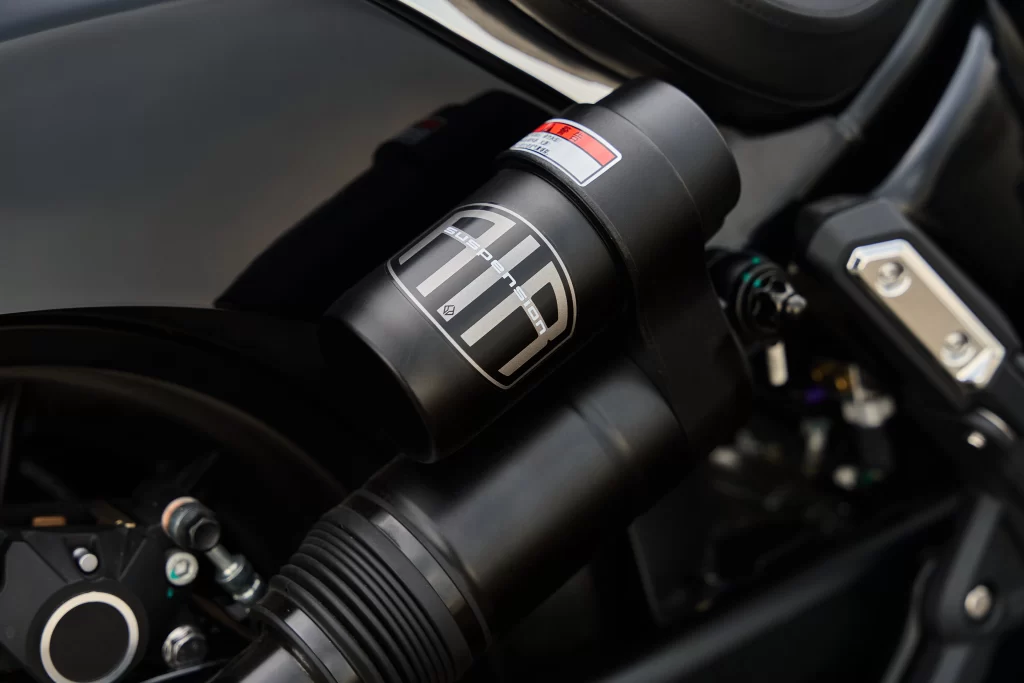
LFC 700 Pro: Central Dual-Chamber Air Suspension
Compared with the standard LFC 700, the Pro version adopts BENDA’s centrally mounted dual-chamber air suspension system., enabling multi-dimensional adjustment of suspension behavior. When the motorcycle is parked, the system automatically lowers the chassis to improve accessibility and present a lower resting stance. After startup, the suspension gradually returns to riding height, while at higher speeds the system adjusts compression characteristics to enhance stability and comfort. Combined with an adjustable seat height range of 650 to 730 mm, the LFC 700 Pro offers improved ergonomic flexibility without sacrificing chassis control.
Dark Flag 500 Commander: Twin-Side Single-Chamber Air Suspension
The Dark Flag 500 Commander uses a twin-side single-chamber air suspension configuration integrated with adaptive electronically controlled damping. This system automatically compensates for changes in load and riding conditions, maintaining stable chassis geometry whether ridden solo or with a passenger. During operation, suspension height is continuously adjusted within a range of 670 to 700 mm, coordinated with riding modes that balance comfort and dynamic response. The electronic control system allows the suspension to adapt in real time to vehicle speed and riding behavior, ensuring consistent ride quality across different scenarios.

Rock 707: Twin-Side Dual Chamber Air Suspension
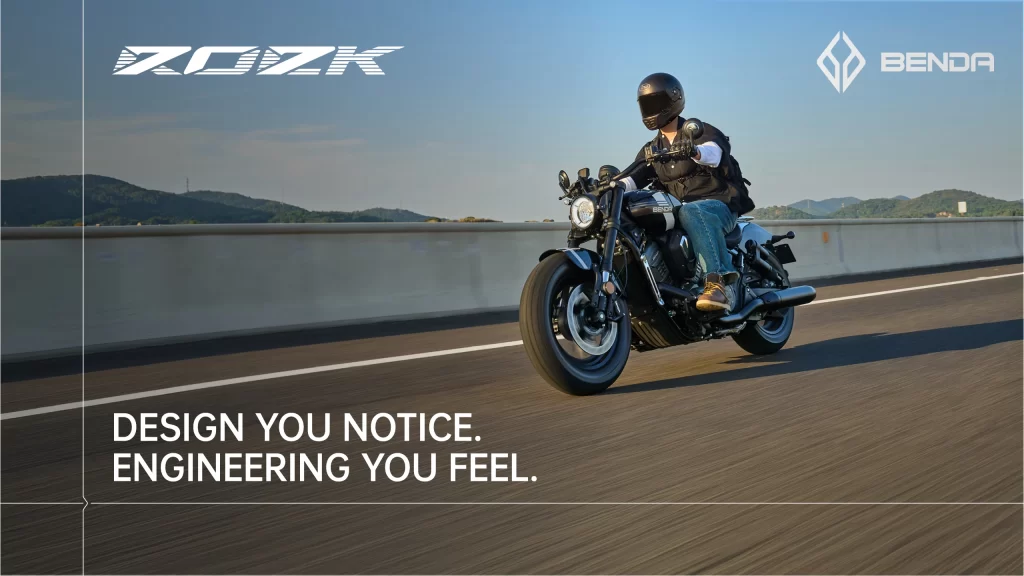
The Rock 707 is equipped with a twin-side dual-chamber air suspension system, optimized with a more integrated structural design. In this configuration, the primary air chamber is incorporated directly into the shock absorber body, resulting in a visually clean appearance while preserving full dual-chamber functionality. This design approach achieves a balance between performance capability and cohesive styling, aligning suspension technology with the overall aesthetic language of the motorcycle. Seat height adjustment on the Rock 707 ranges from 690 to 720 mm, supporting both relaxed cruising and more dynamic riding preferences.
Engineering for Experience, Not Complexity
Compared with conventional hydraulic suspension systems, air suspension provides not only improved comfort but also greater consistency of handling across changing loads and road conditions. By actively maintaining optimal chassis posture and suspension response, the system reduces the need for manual setup and allows riders to focus more fully on riding itself rather than mechanical adjustment. Built on automotive-grade validation standards, the system is designed to support long-term durability under extended real-world use.
BENDA’s air suspension systems were co-developed in collaboration with Huawei (SERES Auto), adapting mature automotive suspension technologies to the unique dynamic requirements of motorcycles. At present, this technology is applied primarily to BENDA’s 500 to 700 cc platforms, reflecting both performance suitability and market positioning, with ongoing development aimed at expanding its application across future product lines.
Through the integration of intelligent suspension control, BENDA continues to pursue a broader engineering objective: allowing technology to manage complexity while enhancing the rider’s sense of confidence, comfort, and connection to the road. In this way, suspension becomes not only a mechanical component, but an active contributor to the overall riding experience.